
September 27, 20265 min read
Momentum Moves in Waves
Twice in twenty months, momentum on the S&P 500 went from the floor to the ceiling and back. The line turned before the price did both times.
Read episodeThe Sunday Read
A weekly research archive built around one Sentinel table, one repeatable reading method, and the questions the market will answer on its own schedule.

Twice in twenty months, momentum on the S&P 500 went from the floor to the ceiling and back. The line turned before the price did both times.
Read episode
Three oscillators on one price series are one measurement asked three times. The information sits where independent layers disagree.
Read episode
Gold left four imbalance zones behind in March and has not touched one in six months. What that silence records, and why a tool that keeps its misses is worth more than one that promises fills.
Read episode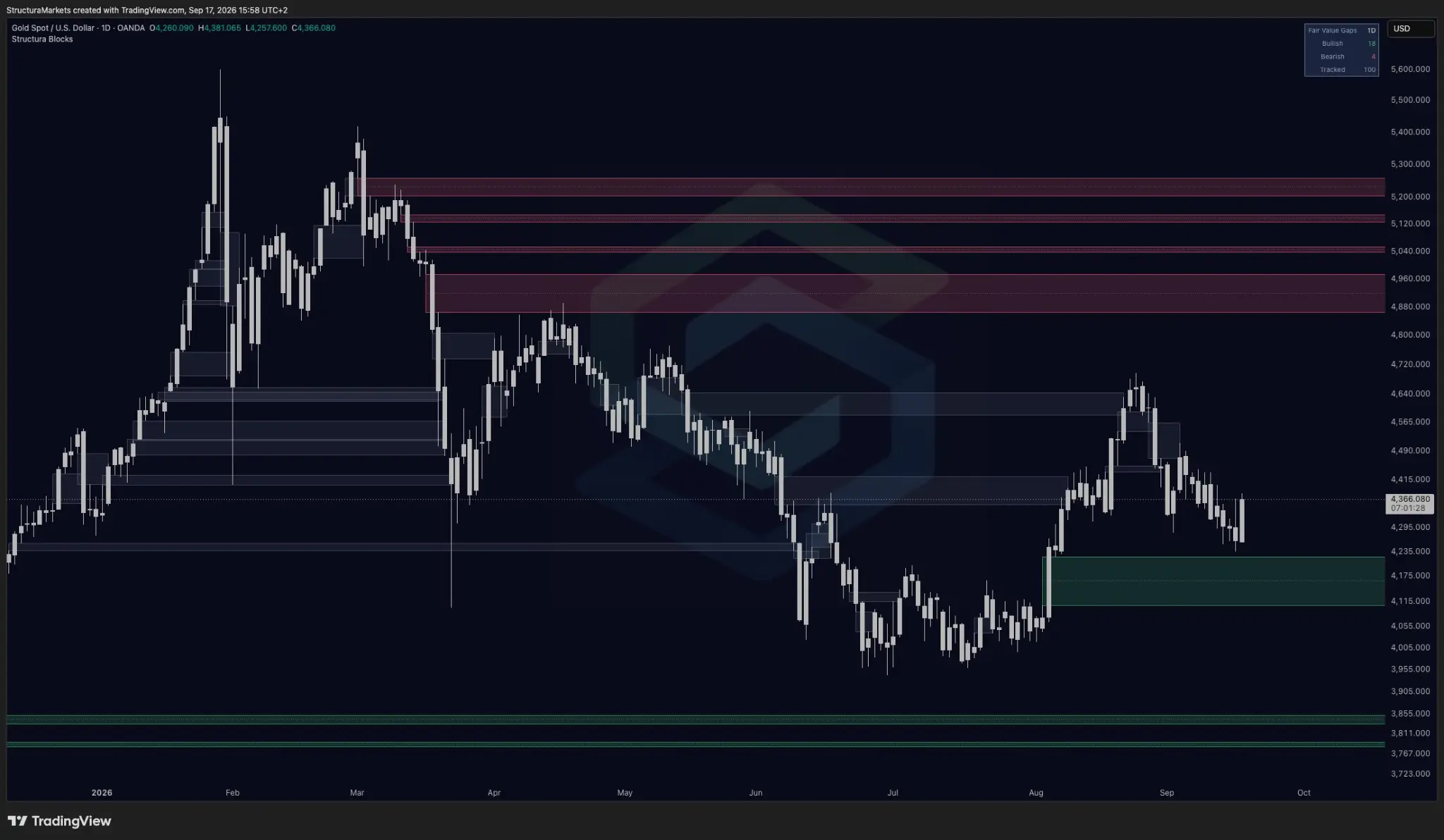
A fair value gap is a range where trade barely happened. What it records, what it does not predict, and why the age of a gap matters more than its existence.
Read episode
Our accumulation layer has printed nothing on Apple for 360 bars, through a seventy percent advance. That silence is the tool working correctly.
Read episode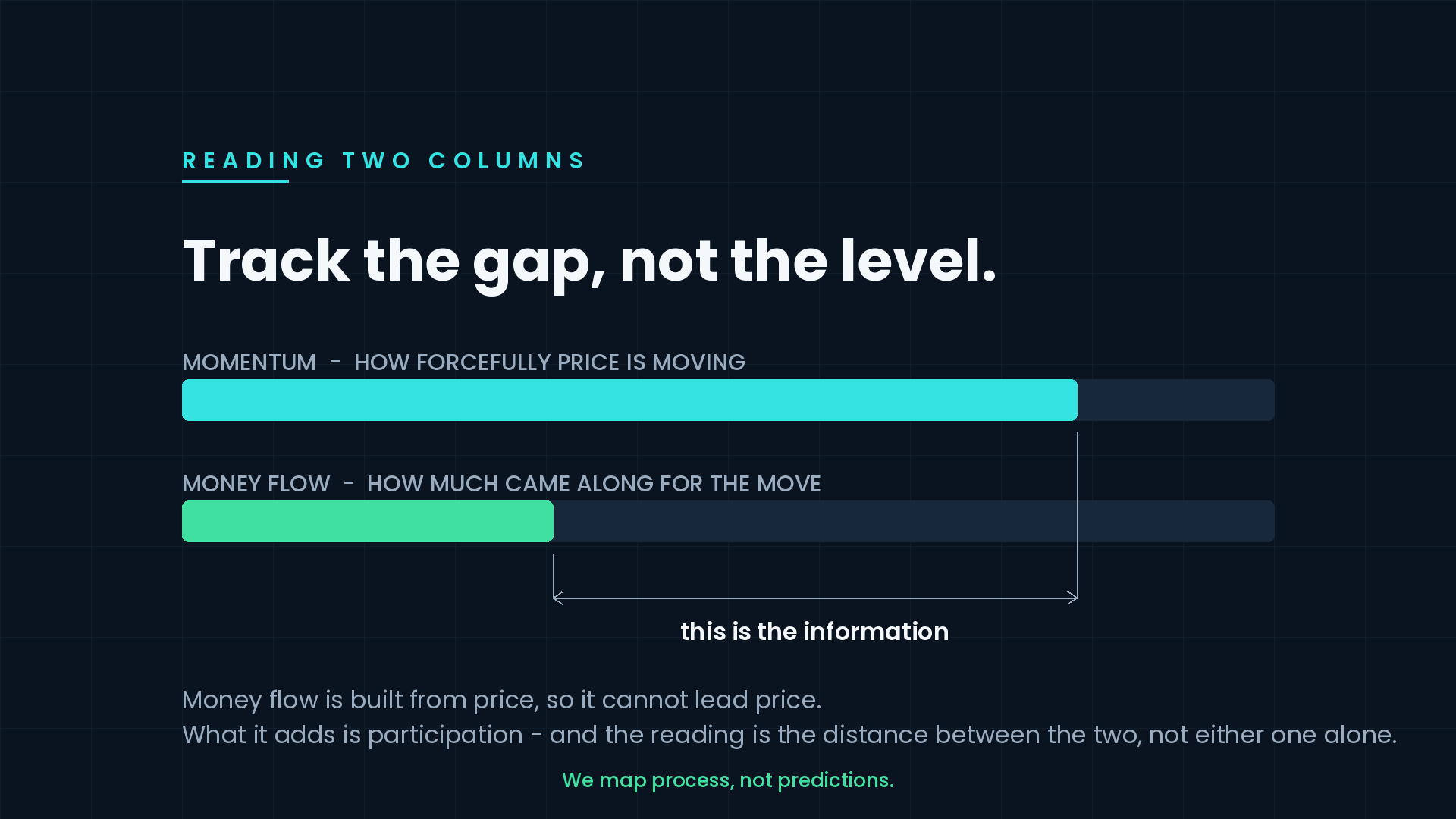
Money flow does not predict price — it is built from price and follows it. The useful information is not the level but the gap between money flow and momentum.
Read episode
Eighteen months of one chart and about fifteen divergence marks: one was followed by a two-hundred-dollar decline, several by nothing.
Read episode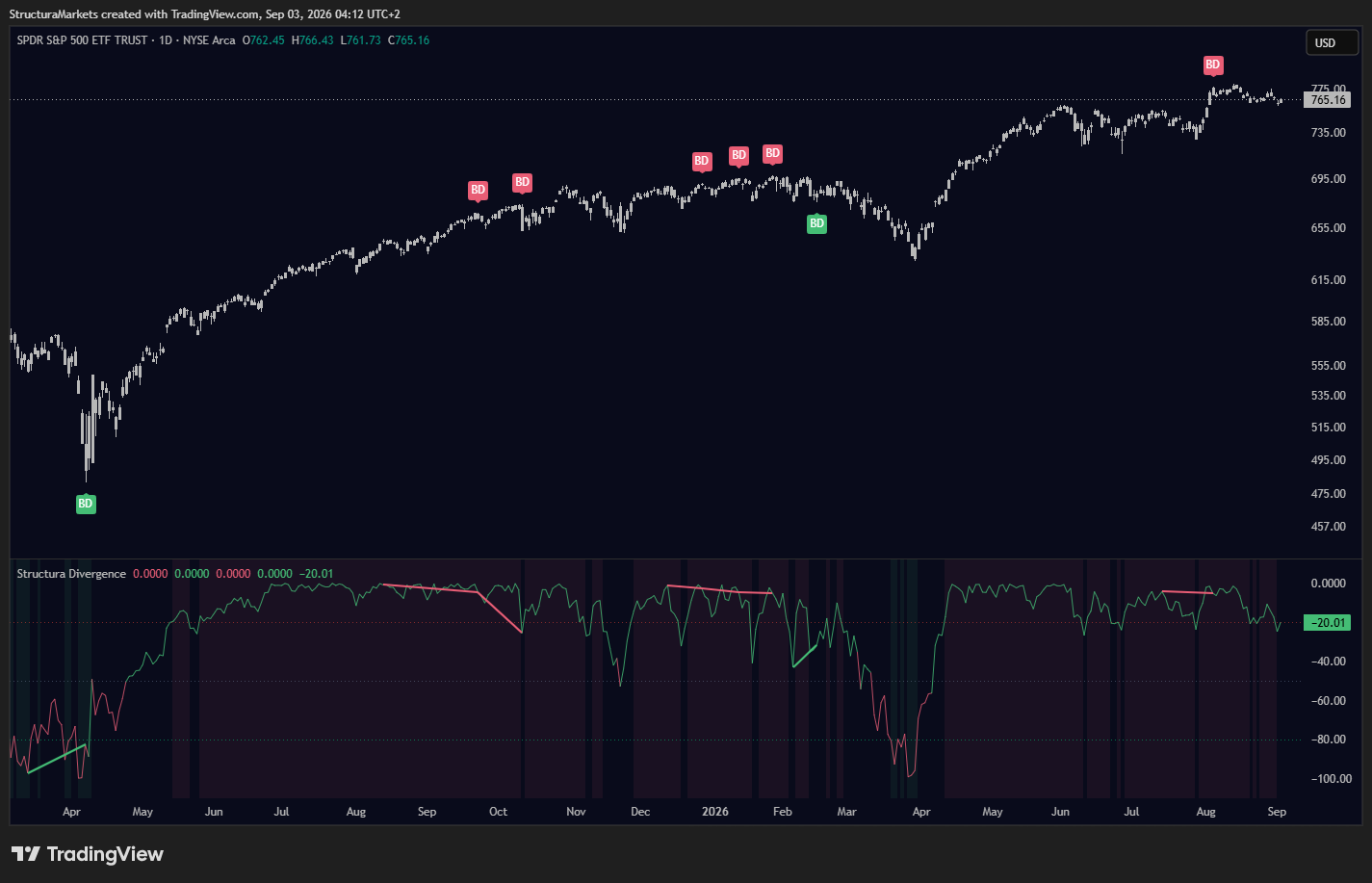
A divergence is a disagreement, not a signal. It happens when price makes a new extreme and the momentum underneath it does not agree.
Read episode
Friday painted the whole board red - and a scanner table full of red can feel like eight emergencies at once.
Read episode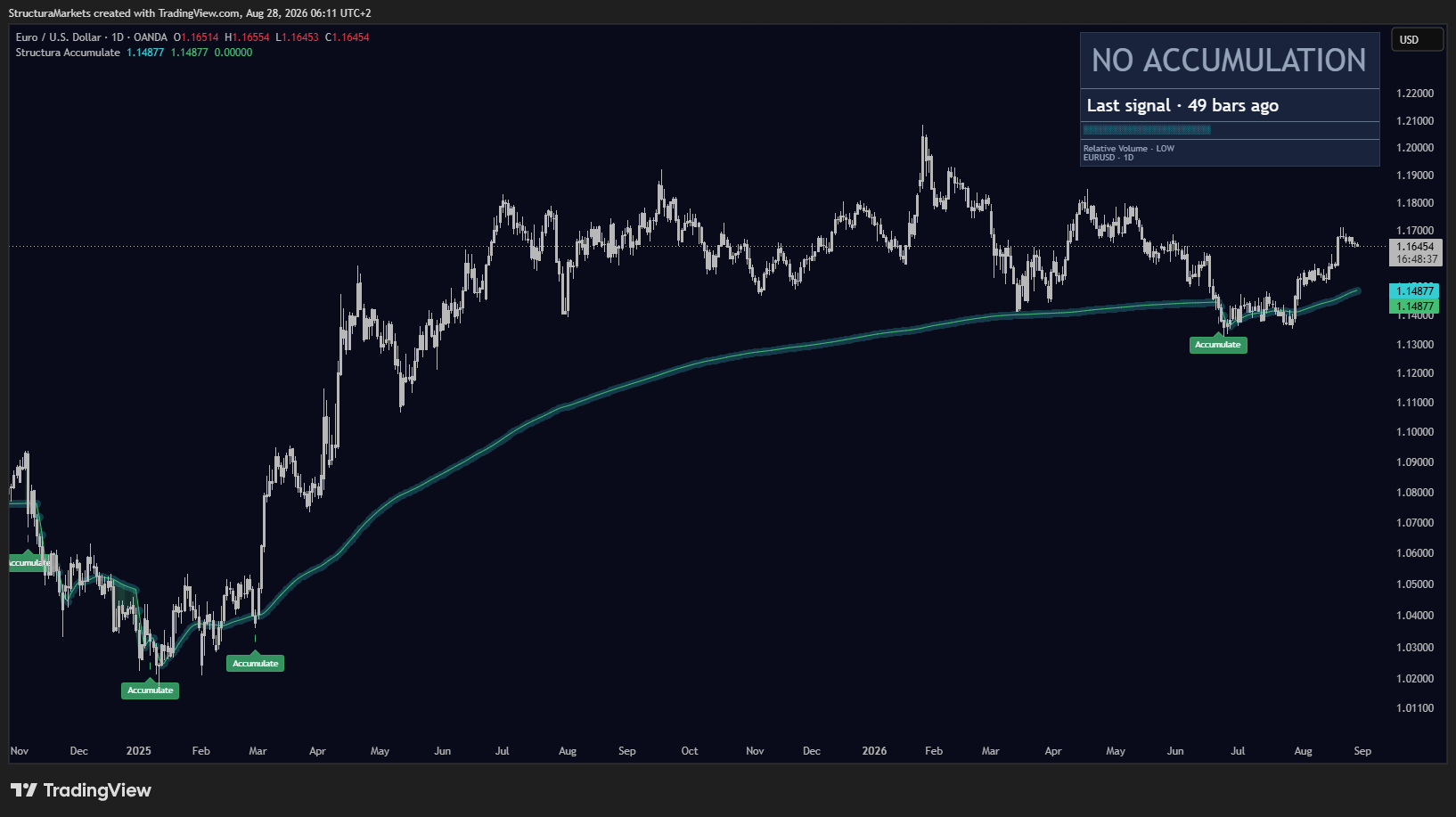
An accumulation zone is a place, not a promise. It marks where price spent time being absorbed - where selling met patient buying and the market stopped going down without yet going up.
Read episode
Three breakouts in one week, and the feed calls them obvious - now. Sunday Read #4 on the only thing that separates a record from a story: the date on it. Bitcoin's base was stamped by the slowest layer; the metals' by the faster ones.
Read episode
The index closed the week at a record while money flow read +26, then 0, then negative as the timeframes got faster. Sunday Read #3 on the rule under the table: neither number is a signal - the distance between them is.
Read episode
Gold resolved down on our Sunday table, then rallied hard the following week. Both things are true. Sunday Read #2 on what a Status label actually promises - and the widest momentum-flow gap on the board.
Read episode
The full method from Sunday Read #1: read columns before rows, treat Status as a noun and Momentum as an adjective, respect sticky states, timestamp every label - and open exactly one chart.
Read episodeRead us first in your Google results: